By Michelle Newlands
Written Wednesday, February 25.
I support fair trade. I stand against oppression.
Today it felt as if we travelled in time. We met with a group of indigenous women wearing their traditional dress and slippers in the town of Cuentepec. Their houses had dirt floors and no running water. The washroom was a toilet without a seat and a curtain for a door.
We gather around a table with these women as they taught us their craft that has supported their community for over hundreds of years, crafts made of clay. Clay pots, clay sculptures, clay candle holders, clay necklaces, you name it. We made ‘circle of friendship’ candle holders.
There was a German lady there who set up a fair trade organization where businesses can purchase these products at a reasonable price for the womens' labour. A lot of their products are also sold in the United States and Canada through 10,000 Villages. Fair trade was created to allow people living in poverty an opportunity for a better, deserving life. Their products are sold and the profit goes to cost of production and into the pockets of the rightful owners.
Whenever I have seen handmade items from other countries I consider where they are from, but have never been able to picture the conditions in which they were made. Today I not only saw it, but was able to be part of it.
Today I noticed a clay candle holder at the abbey sitting on the table and pointed it out. It’s meaning will be greater from this day on.
Gary reminded me of what Juan had said, making the invisible, visible.
Together our different generations from what felt like different universes smiled and laughed together as some of us Canadian students learned their craft, and others didn’t. We were surprised how difficult the work was and how beautiful the final product.
When we were finished together we had a table full of food for lunch. Some we had brought some they had supplied and of course there was Coca Cola. We thanked the women for the amazing day and got back on the bus.
After lunch we met with two members of an activist group called the People’s Movements. They taught us about the Zapatistas. The Zapatistas are a social movement that began in 1994 and is said to be one of the most important movements in Mexican history.
The indigenous people in the state of Chiapas started this movement because of the way the government was treating their people and their land. In association with NAFTA, the Mexican government re-wrote section 27 of the Mexican Constitution declaring the indigenous people the rights to their land. By changing the Constitution, through NAFTA, it allowed United States and Canadian to buy and sell freely with the country of Mexico, including all of its land.
The land began to sell and grew polluted, people were being converted and blindly starting fights with their own people. In defence, the Zapatistas were created.
The information we gained about this movement was strong. The Mexican government classifies the Zapatistas as terrorists. The Zapatistas are not terrorists. They are people being terrorized who’ve decided to no longer accept this treatment and stand up for their rights and initiate change. They are not violent nor do they want to replace the government currently in power.
The Zapatistas fight against oppression. They do not want power, they say power rots and corrupts the blood. Their goal is to be left in peace and live off the land in the ways in which they have lived for centuries. They say when the land is abused, we cannot survive. This is the problem they are currently facing because of what the government has been doing.
They say it is a strong commitment to be a part of the Zapatistas. They say it is not a job, but a service and this is why they rotate the services and responsibilities within the communities.
“They want a world in which many worlds fit.”
They do not support violence, although they have weapons for protection against the 56 military bases surrounding the 34 active municipalities. Because of this movement Chiapas is the highest militarized zone in the country.
This movement has gained international attention and international support. There are organizations, Universities and individuals in the United States and Canada that actively support this movement including the National Indigenous Congress. Later when our group was discussing this topic, we figured out any person or persons who fight against oppression, of any form, have the characteristics of the Zapatistas and should learn about the rapidly growing movement.
Because of the international media this movement received, it gave people the opportunity to learn about this movement, to know people are out there fighting for human rights. Many say if the people in Mexico living in oppressed societies and poverty were aware of this movement it would be growing even more rapidly and would gain many more supporters. Unfortunately, the government controls what goes on the television and radio and only 1.5% of Mexicans are able to read, which means they cannot learn from newspapers.
Because of the amount of international media coverage the Zapatistas received, people all over the world are being influenced by this movement and are able to act on it. Our speakers said if people don’t report on it, others will not believe it exists. This is the case for many human rights issues and movements.
As a member of the media, I found this not only inspirational but motivating. It is our responsibility to ‘make visible, the invisible.’ It is our job to inform people around the world, about their rights and their options. Each day I learn more about how important a role we, as the media, play in universal hope for positive change and how important you, as the readers are to spread the word. Spread awareness and create social change.
Wednesday, February 17, 2010


Tuesday, February 16, 2010
Focus on Central America and Urban Poverty
By Michelle Newlands
Written Tuesday, February 24.
This morning during our walk we found two building parallel one another located on a large piece of property with a soccer field. It appeared to be a school. Each building had two floors with numerous classrooms. The electricity and water were not working but were installed, but still the building remained empty. We talked about how awesome it would be to turn it into a classroom for international exchanges with Loyalist students where we could come and learn.
Written Tuesday, February 24.
This morning during our walk we found two building parallel one another located on a large piece of property with a soccer field. It appeared to be a school. Each building had two floors with numerous classrooms. The electricity and water were not working but were installed, but still the building remained empty. We talked about how awesome it would be to turn it into a classroom for international exchanges with Loyalist students where we could come and learn.
On the walk home I saw the biggest dog ever that looked like a Mexican version of Beethoven.
Later at breakfast Sister Alajandra told us how it was meant to be a school but for whatever reason, the municipal government forbid it.
For the rest of the day I struggled; mentally, physically and emotionally. In many ways you could say I lost it.
To begin with, for the first time since I arrived I could feel my body catching up with me. I was tired, weak and a little under the weather. For the first time in my life I relied on coffee to keep me awake. Not because I wasn’t interested in what was going on, but because my body was giving out.
We went to visit a family who immigrated to Mexico from El Salvador 27 years ago and met with a life-long activist in Liberal theology who later introduced us to her friend Estela, who lives in a co-op settlement with her four children.
Gloria, the mother of the El Salvador family, and Estela are two of the strongest, most influential people I have ever met. Their stories and strength empowered me and changed my life.
I will start with Gloria. Gloria grew up in El Salvador. In 1977, when she was 14 years old, communism entered the country. This is what she calls the beginning.
Gloria and others like her, wanted to help people people. They wanted to break out of the old tradition; play music in the church and focus on conflicts and solutions. There were many conservative catholic’s who disagreed with this, causing a separation between the people. The government was communist and was not in favour of the people and so a movement began in hope of change. The movement was not interested in war or conflict. They were interested in equality, change and human rights. They thought they could reach their goals without arms.
In 1978 and 1979, the military sent 100 soldiers into the villages where they knew the movement was active and they would look for the leaders.
In 1979, two members of the movement living in Gloria’s village disappeared and were never seen again.
It got to the point where people from Gloria’s village were being murdered and they were forced to hide in the mountains and get weapons. The Arch Bishop told the people, “Stop the repression against your own people, these are your brothers and sisters you are killing.”
“In the name of God, stop.”
The next day, he was killed. Gloria said this is when they realized they meant nothing to the government. If they could kill the Arch Bishop, they would have no problem killing them as well.
In 1980 the government planned an ambush on Gloria’s village. Gloria told us the story of one of the children who had survived. The child remembers telling her mother she was afraid because they could hear gun shots. Her mother told her to go hide under the bed.
“I don’t want to go alone,” she said.
Her mother did not answer her after that. She recalls seeing the inside of her mother’s stomach on the outside. Forty six people were killed that day. Three were men, one was Gloria’s father. The rest were women and children.
Throughout this war, Gloria was captured by military and held captive for days with no food or water her two small children with her. She lost her father, brother and two sisters to this war.
“The majority of our generation was killed,” Gloria said. “[But] it was not our time to die.”
Gloria escaped to Mexico in the early 1980s and says the only reason she survived was because she left the country.
Gloria said people think she left El Salvador because people were dying of hunger, she tells them no, the government was killing us.
Gloria and her family came to Mexico with nothing and were very poor, but humble and happy she said. Her and her husband are now quite successful and own their own business making T-shirts. Over the years they have built themselves a beautiful house with a lovely garden and have four children who all attend school and who they are very proud of. Gloria said there is always emptiness inside of her left behind from her past.
People are still being exposed to the same terrors as Gloria around the world.
Next we met Elaine. Elaine is a single mother of four living in a ravine settlement. She grew up in the state of Chaipas, the poorest state in Mexico. It had no schools, no jobs, no running water and no electricity. She was married there and had four children.
Her husband abused her and told her she was nothing, told her she was worthless and threatened her life with a gun to her head. Things are different in Mexico compared to Canada. Women have very little rights, leaving your husband is something women don’t do. It is not accepted by society and looked upon as sin.
Elaine is one of the few women who stood for her rights as a female and as an individual. With nothing but the clothes on her back she left the state of Chiapas and her husband behind in hopes of a new life.
She said when she arrived to the city of Cuernavaca she had no idea what she would do and stayed with her Aunt. She said for days she would cry and cry. Sometimes, she said she felt as if she were drowning in depression. Her father threatened to take her back to Chiapas, said it was unacceptable for her to leave her husband but Elaine stayed strong and refused. Eventually her father accepted he would not be able to change his daughters mind. He helped her purchase material to build the one room home which she and her four children now live in.
The things that struck me about Elaine were her purity, her optimism, smile and passion to live. She lived through terrifying circumstances and held no hatred towards the world or the people in it who made her life hell. She said she had no negative thoughts against her husband and wished him well. She said she thanked him. Without the cruelty in which he treated her, she would never have gained the strength to leave and would never have been able to offer her children an opportunity to a better life.
Agustina said Elaine is the kindest, most selfless person she has ever met. If all she has to eat is a small plate of rice and tortilla after she has fed her children she will share what little she has with her neighbours.
Agustina brings many different groups from all over the worlds to meet with Elaine and hear her incredible story. She said many of the students have written and told how her story changed them. Elaine blushes and says she knows nothing.
A member of Quest said to Elaine, “This isn’t true. By sharing your story you have taught us so much about life that we can’t be taught in school. You are worth so much and we thank you.”
I left her house in tears, as did many members of our group. I felt selfish and embarrassed coming from a country where we are given so much but are still not happy. Elaine was never given anything. The little she has, her one room house with two beds and a curtain dividing where they eats from where they go to the bathroom, is a product of her sweat and her tears. Her story made me want to be a better person. I was blessed with many opportunities in life as are most Canadians. Who is to say we deserve them any more than Gloria, who was forced to flee her country in terror, or the children whose lives were taken before they began, or Elaine who has never known anything but extreme poverty.
Hearing these stories, there were times my body would tremble as I cried and I wanted to leave the room except I couldn’t find the strength to move.
At dinner in the Abbey the group reflected on our day and shared what we had learnt and how it had touched us. I tried to explain how I had felt and how I had lost it.
Gary told me I hadn’t lost anything.
He told me I had found it.
Tuesday, January 26, 2010
"Life Explained"
This is a forward I received from a good friend. I usually never open them but this time I did and I was glad. This short story allowed me to take the time to stop and process meaningful information that holds true for most individuals.
 A boat docked in a tiny Mexican village. An American tourist complimented the Mexican fisherman on the quality of his fish and asked how long it took him to catch them.
"And after that?" asked the Mexican.
 A boat docked in a tiny Mexican village. An American tourist complimented the Mexican fisherman on the quality of his fish and asked how long it took him to catch them.
 "Not very long," answered the Mexican.
"But then, why didn't you stay out longer and catch more?" asked the American.
The Mexican explained that his small catch was sufficient to meet his needs and those of his family.
The American asked, "But what do you do with the rest of your time?"
"I sleep late, fish a little, play with my children, and take a siesta with my wife. In the evenings, I go into the village to see my friends, have a few drinks, play the guitar, and sing a few songs. I have a full life."
The American interrupted, "I have an MBA from Harvard and I can help you! You should start by fishing longer every day. You can then sell the extra fish you catch. With the extra revenue, you can buy a bigger boat."
"And after that?" asked the Mexican.
"With the extra money the larger boat will bring, you can buy a second one and a third one and so on until you have an entire fleet of trawlers. Instead of selling your fish to a middle man, you can then negotiate directly with the processing plants and maybe even open your own plant. You can then leave this little village and move to Mexico City, Los Angeles, or even New York City! From there you can direct your huge new enterprise."
"How long would that take?" asked the Mexican.
"Twenty, perhaps twenty-five years," replied the American.
"And after that?"
"Afterwards? Well my friend, that's when it gets really interesting," answered the American, laughing. "When your business gets really big, you can start buying and selling stocks and make millions!"
"Millions? Really? And after that?" asked the Mexican.
"After that you'll be able to retire, live in a tiny village near the coast, sleep late, play with your children, catch a 

few fish, take a siesta with your wife and spend your evenings drinking and enjoying your friends."
And the moral of this story is: ......... Know where you're going in life... you may already be there.
- Author Unknown
As North Americans we are always in such a hurry to get things done quickly, work harder and make more money... what for? So we can brag to our nieghbours about all the materialistic value we have stocked up in our 3 car garages we don't have time to use and have no friends left to share it with.
It's time we, as individuals and as friends, work together to bring value back into our days. Slow down. Relax. Sleep late. Play with your children. Catch a few fish. Have a siesta with your wife and spend your evenings drinking and enjoying your friends.
Live your life. Love yourself.
- Author Unknown
As North Americans we are always in such a hurry to get things done quickly, work harder and make more money... what for? So we can brag to our nieghbours about all the materialistic value we have stocked up in our 3 car garages we don't have time to use and have no friends left to share it with.
It's time we, as individuals and as friends, work together to bring value back into our days. Slow down. Relax. Sleep late. Play with your children. Catch a few fish. Have a siesta with your wife and spend your evenings drinking and enjoying your friends.
Live your life. Love yourself.
Looking out for your own - Community Policing
Written by Michelle Newlands
February 2009
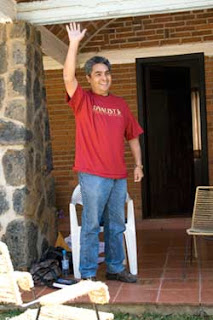 In several municipalities in Mexico, where money is scarce and security is scarcer, communities are developing their own version of community policing with some measure of success, says one human rights activist.
Over 10 municipalities in Mexico are implementing this new program as part of a larger effort to be independent and to protect their communities. Many rural communities in Ontario use community policing as a method of providing security to isolated areas where police are unable to patrol on a regular basis. It also become a meaningful outreach program for the police and keep residents feeling safe, as well as allowing them to participate in their own security.
Juan Manuel Zarragosa, a human rights activist in Mexico and member of ‘the people of Yautepec’ met with Belleville students of Quest Internacion to introduce them to the concept of community policing Mexican style.
Community policing is when the residents chooses not to rely solely on a regular police presence but on the people living within the village. Community policing is when certain members of the community dedicate their time to monitoring their village and preventing crime. Community Police do not have an income, but receive food from members of the community instead. Villages who have implemented this movement say a reduction in crime is clearly evident, Zarragos said.
The movement began with the idea of trying to recreate the traditional essence of community involvement and participation. The principle is one of self-help, where residents take responsibility for themselves rather than relying on others outside the community. He also alleged when a family would report a crime, such as a robbery or rape, some police would demand money in order to investigate the incident, saying they had no money for gas. Some of the times it was legitimate, other times it went into their pocket. There was also very little trust in the police officers. Zarragos referred to a saying, “When the police come, everything goes downhill.”
Complaints were made to the Governor of Mexico and, to their surprise, he agreed with them. Money was given to buy weapons to protect their own communities. In some extreme cases, cities and villages, such Chiapas, the police are banned from the city and can only enter when given proper approval.
When criminals are detained by the Community Police, Zarragos said their sentence is more similar to rehabilitation than prison. The criminals are fed, housed and treated with rights and respect. The sentence is often community service, where they pay for their crime by doing labour for the community. When their sentence is up, the Community Police present them back to their family in a ceremony like setting in front of the entire community. The Community Police ask the parents to ask their children if they were beaten, starved and treated fairly while detained. The Community Police want all people of their village to know they treat all people within the community with respect and dignity, even criminals.
The reason his involvement is not easy work, and his motivation is his daughter, Zarragos said.
“Sometimes I worry... I want her to be safe,” he says. “[This work] is something that comes from my heart.”
He said the role of Community Police is to protect, listen and share; to make visible the invisible.
He also said it is a luxury to call something a success, and success is not necessarily something the movement is interested in.
“Who can measure success? It is about how happy we are,” he said. “Success could be the level of confidence within a community... when things are progressing. It’s about getting up and doing something different,” he said.
Written by Michelle Newlands
February 2009
 In several municipalities in Mexico, where money is scarce and security is scarcer, communities are developing their own version of community policing with some measure of success, says one human rights activist.
Over 10 municipalities in Mexico are implementing this new program as part of a larger effort to be independent and to protect their communities. Many rural communities in Ontario use community policing as a method of providing security to isolated areas where police are unable to patrol on a regular basis. It also become a meaningful outreach program for the police and keep residents feeling safe, as well as allowing them to participate in their own security.
Juan Manuel Zarragosa, a human rights activist in Mexico and member of ‘the people of Yautepec’ met with Belleville students of Quest Internacion to introduce them to the concept of community policing Mexican style.
Community policing is when the residents chooses not to rely solely on a regular police presence but on the people living within the village. Community policing is when certain members of the community dedicate their time to monitoring their village and preventing crime. Community Police do not have an income, but receive food from members of the community instead. Villages who have implemented this movement say a reduction in crime is clearly evident, Zarragos said.
The movement began with the idea of trying to recreate the traditional essence of community involvement and participation. The principle is one of self-help, where residents take responsibility for themselves rather than relying on others outside the community. He also alleged when a family would report a crime, such as a robbery or rape, some police would demand money in order to investigate the incident, saying they had no money for gas. Some of the times it was legitimate, other times it went into their pocket. There was also very little trust in the police officers. Zarragos referred to a saying, “When the police come, everything goes downhill.”
Complaints were made to the Governor of Mexico and, to their surprise, he agreed with them. Money was given to buy weapons to protect their own communities. In some extreme cases, cities and villages, such Chiapas, the police are banned from the city and can only enter when given proper approval.
When criminals are detained by the Community Police, Zarragos said their sentence is more similar to rehabilitation than prison. The criminals are fed, housed and treated with rights and respect. The sentence is often community service, where they pay for their crime by doing labour for the community. When their sentence is up, the Community Police present them back to their family in a ceremony like setting in front of the entire community. The Community Police ask the parents to ask their children if they were beaten, starved and treated fairly while detained. The Community Police want all people of their village to know they treat all people within the community with respect and dignity, even criminals.
The reason his involvement is not easy work, and his motivation is his daughter, Zarragos said.
“Sometimes I worry... I want her to be safe,” he says. “[This work] is something that comes from my heart.”
He said the role of Community Police is to protect, listen and share; to make visible the invisible.
He also said it is a luxury to call something a success, and success is not necessarily something the movement is interested in.
“Who can measure success? It is about how happy we are,” he said. “Success could be the level of confidence within a community... when things are progressing. It’s about getting up and doing something different,” he said.
Wednesday, January 13, 2010
Lessons on human rights
By Michelle Newlands --- Written February 2009
After a nature walk and breakfast us girls sat in the yard and relaxed in the sun as we waited for human rights activist Juan Manuel to arrive. It was a beautiful day, probably the hottest one yet and it was nice to put on summer close and relax for a while. 
When Juan arrived he taught us about different activist movements including the people of Auetapec, the Zapatistas and others. He taught us about community police and discussed the relationship between the struggling economy and its effects on violence and crime. He said that when the economy suffers, people have no choice but to turn to drugs and illegal labour in order to survive. He told us stories about children, no older than 8 or 10 years old, working in poppy fields all day. They pick with their hands leaving behind residue then they touch their face and mouth and they become accidentally high the majority of the day.
He told us what these different movements were doing and how we can help. He told us by listening and educating people on the similar subjects we can help change the cycle of violence and corruption.
We went to the plaza in Cuernavaca where we met with the Lopez family. They have a large family all of who sell things on the streets for money. They have a one room house with no toilets or electricity and must spend 55 pesos a day travelling to Cuernavaca to sell their things. If they do not sell anything that day they do not get to go home, nor do they get to eat. They sell necklaces, bracelets, weaved baskets and purses among other things.
He told us how he was married to his wife when he was 16 and she was 15. He was an orphan and needed to find a woman to cook and look after his many younger brothers and sisters. The Lopez family has been selling things on the streets their whole lives.
Most days they can’t afford to come into town and make about 3 - 4 trips a week and sell what they have. If they can’t afford the bus ride into town, they will walk through horrible conditions for three hours so the bus ride will only cost 25 pesos. They leave at 5:00a.m. to catch the 8:00a.m. bus to Cuernavaca.
None of the family can read or write and have never attended school. Their son has just recently had a new child and Mrs. Lopez has a tumor. She says some days she is in so much pain she feels like she is dying. Sometimes the pain will last for up to two weeks at a time. The family had to borrow 3,000 pesos from someone in their village for her medication and they are paying 30 per cent interest a day. Mr. Lopez says how can we pay them back when we have no money? Most days it is a struggle to simply survive. As he told the family story the two young children laughed and played in their dirt covered clothes and snotty faces. Their smiles were as innocent and pure as any barefoot child you've ever met.
When they were finished sharing their story we bought some of their items and Mr Lopez gave us each a finger-trap as a gift. He said it is for the girls boyfriends, and the boys girlfriends, this way they can’t get away he joked.
I thanked Mrs Lopez, wished her luck and told her she had a beautiful family.
Next we went to visit a school for street kids called Casa Tatic. It was amazing. Previously I had spoken to Gary about the possibility of me doing my internship with VAMOS!, the organization providing funds for the Casa Tatic to have their facility, and so I was introduced to Alajandro Lopez, the project director. We talked about different possibilities for me :) .
We were shown a short video on VAMOS and different struggles Mexicans living in poverty must face. Many people could not help but let out a few tears, no matter how hard we tried to hold it in.
I’m not sure what touched me the most; the sad truth of these unfortunate circumstances, the strength of people when they work together and how much people are doing to help or the fact that some people really just don’t care.
After the video we were given the privilege of having a tour of the school. We were introduced to the  students, whom all said hello/good afternoon, “Hola, buenos tardes.”
For the next two hours we were given free time. Lynne, Chrissy, Jill and I stayed in town to do some shopping. We went to numerous stores and bought numerous things like dresses and purses. I suppose girls will be girls! Then we headed back to the market we visited the previous day and hoped in a cab back to the Abbey.
Please note: We can always tell when we start to grow tired because the laughter begins and doesn’t end, no matter how NOT funny things really are. Caitlyn and I have also realized we have one small problem: no matter where we are or what the occasion we can always break out into song, appropriate or not!
Our day with a Mexican family
By Michelle Newlands --- written February 23, 2009
This morning I was tired and I contemplated going on the walk. In the amount of time it took me to decide, my brain woke up and I jumped up and joined the rest. I’m glad I did. It was the most beautiful walk so far and filled with some of the best conversation.
 We went up city where we met a man who moved to the town only a few months ago. He told us how if we continued up the road we would find a place where there used to be an old railroad that has now been cleared and is a lovely path to walk along. He likes to take his horses there. The group of us went and found the path and you could look down on the entire city and surrounding cities.
It was magnificent! The sun was rising and peeking through the clouds with its rays of light hitting the city below, saying good morning to the world in a breathtaking way. We stood at the top and admired the view for some moments before starting our way back down... wish I brought my camera.
On the way we discussed different non-profit organizations and different projects they're working on. We reflected on the past days and shared some of our goals, ideas and hopes for the future. One thing we agreed was how any one person is able to make a difference and create change.
We talked about the children in La Estacion and how their sponsors give them the opportunity to a better life they would never see without those funds. About how our payment for the visit gave the school money to provide their services. We discussed how our payments for staying in the Abbey give the Sisters enough to keep going for a whole year and how without even realizing it we have the power to help effect lives. It’s crazy what people can do when they work together.
After breakfast we headed to meet Loraine so she could introduce us to the families we would be spending the day with. Chrissy, Caitlyn and I went together to a lady named Juan’s house. We met her two daughters and granddaughter and accompanied them to mass. None of the family spoke English, and the three of us Canadian girls were nervous, more so Caitlyn and I.
When we arrived at the service the church was completely full. It started off with people playing ukuleles and singing, while the pastor walked down the aisle sprinkling holy water on everyone. Following was a parade of people holding candles on huge poles and lanterns with smoke coming out. I’m not an extremely religious person nor do I normally attend Sunday services so this was quite an experience. The music was beautiful and so was the church... but it was cold.
Between the cool temperature, calming music and aroma of incents- it was difficult for me to keep my eyes open for the full hour and a half service (done completely in Spanish of course). I nodded off a couple times and luckily Caitlyn nudged me before I sank too low in my seat... oops!
After the service we went and watched a part of a volleyball game where it was mothers against daughters. Usually the family we were staying with would play but not today. We then returned to their house for lunch and a lovely dessert of apples, pineapples, nuts and some cream that tasted delicious.
 After lunch the 16 year old daughter, her friend and a family member named Gabriel took us in the car up through the hills to the lagoon....we were speechless. The roads were winding up and down and all over the place, and Gabriel was just ripping it around the corners. The three of us Canadians were in the back and the two Mexican girls shared the front seat. The trees were massive and green and there was a light rain so the moisture was rising off the ground. We took pictures but they don’t justify the beauty and energy of this place. The six of us walked through this lagoon laughing and trying to talk. The lagoon was more a type of ranch because there were horses everywhere. Chrissy and I decided we would do some riding so we each hoped on a horse and to our surprise the man just let go of the reigns and let us do as we pleased. It was awesome!
Time flew by and soon it was time to go, so one more time through the beautiful mountains we took the winding roads singing to the radio and laughing like 12 year old girls. It was a priceless moment between complete strangers from different worlds mixed with nature and luck that created this unforgettable bond. As funny as it may sound, it’s something none of us can translate into words and may be something only those who have experienced it can understand.
When we returned from the lagoon we took some photos of us all together, presented the gifts we had brought from Canada, exchanged emails, thanked them and said our goodbyes. We all met at Loraine’s house and listened to Matt play the guitar and stepped outside for a bonfire where we discussed our day’s events.
We all agreed it was a magical day filled with great memories and learning experiences.
This morning I was tired and I contemplated going on the walk. In the amount of time it took me to decide, my brain woke up and I jumped up and joined the rest. I’m glad I did. It was the most beautiful walk so far and filled with some of the best conversation.
 We went up city where we met a man who moved to the town only a few months ago. He told us how if we continued up the road we would find a place where there used to be an old railroad that has now been cleared and is a lovely path to walk along. He likes to take his horses there. The group of us went and found the path and you could look down on the entire city and surrounding cities.
It was magnificent! The sun was rising and peeking through the clouds with its rays of light hitting the city below, saying good morning to the world in a breathtaking way. We stood at the top and admired the view for some moments before starting our way back down... wish I brought my camera.
On the way we discussed different non-profit organizations and different projects they're working on. We reflected on the past days and shared some of our goals, ideas and hopes for the future. One thing we agreed was how any one person
 is able to make a difference and create change.
We talked about the children in La Estacion and how their sponsors give them the opportunity to a better life they would never see without those funds. About how our payment for the visit gave the school money to provide their services. We discussed how our payments for staying in the Abbey give the Sisters enough to keep going for a whole year and how without even realizing it we have the power to help effect lives. It’s crazy what people can do when they work together.
After breakfast we headed to meet Loraine so she could introduce us to the families we would be spending the day with. Chrissy, Caitlyn and I went together to a lady named Juan’s house. We met her two daughters and granddaughter and accompanied them to mass. None of the family spoke English, and the three of us Canadian girls were nervous, more so Caitlyn and I.
When we arrived at the service the church was completely full. It started off with people playing ukuleles and singing, while the pastor walked down the aisle sprinkling holy water on everyone. Following was a parade of people holding candles on huge poles and lanterns with smoke coming out. I’m not an extremely religious person nor do I normally attend Sunday services so this was quite an experience. The music was beautiful and so was the church... but it was cold.
Between the cool temperature, calming music and aroma of incents- it was difficult for me to keep my eyes open for the full hour and a half service (done completely in Spanish of course). I nodded off a couple times and luckily Caitlyn nudged me before I sank too low in my seat... oops!
After the service we went and watched a part of a volleyball game where it was mothers against daughters. Usually the family we were staying with would play but not today. We then returned to their house for lunch and a lovely dessert of apples, pineapples, nuts and some cream that tasted delicious.
 After lunch the 16 year old daughter, her friend and a family member named Gabriel took us in the car up through the hills to the lagoon....we were speechless. The roads were winding up and down and all over the place, and Gabriel was just ripping it around the corners. The three of us Canadians were in the back and the two Mexican girls shared the front seat. The trees were massive and green and there was a light rain so the moisture was rising off the ground. We took pictures but they don’t justify the beauty and energy of this place. The six of us walked through this lagoon laughing and trying to talk. The lagoon was more a type of ranch because there were horses everywhere. Chrissy and I decided we would do some riding so we each hoped on a horse and to our surprise the man just let go of the reigns and let us do as we pleased. It was awesome!
Time flew by and soon it was time to go, so one more time through the beautiful mountains we took the winding roads singing to the radio and laughing like 12 year old girls. It was a priceless moment between complete strangers from different worlds mixed with nature and luck that created this unforgettable bond. As funny as it may sound, it’s something none of us can translate into words and may be something only those who have experienced it can understand.
When we returned from the lagoon we took some photos of us all together, presented the gifts we had brought from Canada, exchanged emails, thanked them and said our goodbyes. We all met at Loraine’s house and listened to Matt play the guitar and stepped outside for a bonfire where we discussed our day’s events.

We all agreed it was a magical day filled with great memories and learning experiences.
Tuesday, January 12, 2010
An adventure walk
Today we were given the opportunity to see how Mexico looks from the inside. Like yesterday, a group us met Gary at 7:00 a.m. for our morning adventure walk. This time there were a few more students. We went for a walk in a gated community, which is like a
fenced off neighbourhood. We then continued in the opposite direction we did yesterday.
 We saw beautiful houses, a horse instead of a car in what looked like a garage, beautifully flowered plants, chickens running around on the streets and a man milking a cow on the side of the road. We saw things that to us were incredible, but to Mexican people would be nothing out of the ordinary. We talked about funny it would be to see a group of foreigners in Belleville all walking down the street in their funny clothes with their cameras in hand, snapping pictures of our houses, cars and construction workers. It would be hilarious. This is exactly what we were doing and I’m sure that’s exactly how we looked to them; hilarious.
We returne d for yet another delicious breakfast at the Abbey. We then split into four cabs and
  headed to the squatter settlement in downtown Cuernavaca. The settlement is a piece of government land housing more than 20,000 poor Mexican families. Years ago many of these families had no money and were living in shacks or boxes. Over time they have been able to save enough money to build a more sufficient home out of cement blocks, most with tin roofs. Some houses had more, some had less.
La Estacion is a building in the settlement that is similar to a community center and has been running for 13 years. It is made up of volunteers within the community including over 80 mothers and numerous International and University students. They prepare breakfast for the neighbourhood children and schools 130 kindergarten students. It also holds workshops for students and mothers to improve existing skills, such as knitting and also teach them new ones like pottery for an example. La Estacion has international partnerships with churches and organizations that make donations and find sponsors for the children. The donations cover things like school supplies, maintenance of the facilities, costs of educators, breakfast costs and things like that. The individual sponsors pay for the childrens' school uniforms, shoes, medicine and food.
Out of the 130 children attending La Estacion, there are only 10 who currently have full time sponsors. The children receiving the funds are chosen by the mothers at the center based on financial need.
We were privileged to meet with two of the families involved in the center who live in the settlement also referred to as a cooperative. Both families invited the 13 of us into their home where we gathered on stools, chairs and arm rests to ask questions and listen to their stories.
The Leon family was made up of the mother, Lourdes, the father and their five children. The children were 8, 9 and 11 years old. All of the children attended school and received sponsorships. In order to continue receiving these funds they have to participate, study and be of low income.
The father works two jobs and Lourdes helps sell things at the market but the family is still low income. The fathers daily income for the one job is 150 pesos a day which is equivalent to $15 a day Canadian. Lourdes says this is the cost of feeding her family each day.
Lourdes told us about their living conditions dealing with water, hydro and sleeping conditions. Their electricity contract is shared between 11 families, which means at night it is poorly lit because all 11 families are using the same source of energy at the same time. She s aid the children are sometimes afraid of the dark but there was not much they can do about it. Sometimes their power goes out and it won’t be fixed for days, same for the water. She said a few weeks ago they lost power for over a week and were not able to turn on the lights, shower or do the dishes. They resorted to using paper plates so they could throw them away when they were finished their meals.
She told us about their set of bunk beds; on the top sleep the two boys and the bottom the three girls. The youngest daughter told us how her sister was afraid to sleep on the top because she kept rolling off, so the girls took the bottom bunk and that sister slept in the middle of the other two. Lourdes and her husband slept on the single bed together in the same room as their children.
About a year ago the family was forced to fix  their roof because the rain would leak in. They needed to borrow the money in order to replace the cardboard with tin. The interest rate was 50 per cent and they have a year to pay it back before the rate increases. If they aren’t able to pay, the bank will come and start taking things of value. The bed and the T.V. are the only things of value they own she says.
The two older daughters told us how they like to sing and dance. The mother told us how dangerous the neighbourhood is. She said there are many drug dealers in the area and a lot of crime.
 The second house we went to housed a mother, father, their seven children, and the grandparents. The mother has lived in the cooperative for the last 12 years and her children ranged from 4 to 11 years old. The father has diabetes and is employed at a corner store where he works six to seven days a week, 7:00a.m. until 10:00p.m.
He will make 800 pesos if he works Monday to Saturday and 900 to 1000 pesos if he works Monday to Sunday. This is $80 to $100 Canadian a week to care for a family of two adults and seven children.
The grandfather worked for the railroad before retirement and receives a pension. His daughter, Gloria, says her father is sometimes able to help them out when money is short.
Gloria says the government has programs that cover some of her husband’s diabetes medicine, but not all of it. Right now he has to take drops that cost 380 pesos for a bottle that will last a month.
She tells us how her son likes to play soccer and about the time their house was broken into and robbed. She says over the last few years the police have been present in their neighbourhood. When they were robbed, the police were able to find the person who broke in and return their valuables.
As the mother tells her story, her seven kids surround her, laughing and playing, but mostly staring at us. When I take their photo they smile and pose, then run over to me to see what the pictures look like. Both women have very beautiful families.
When we are finished our visit 10 year old boy Luis Antonia walked us back to La Estacion. We are able to meet with a few of the volunteer mothers and hear more about how the facility is run and get an opportunity to ask questions.
I asked why the mothers chose to volunteer at the school instead of getting work, one mother named Maria Carmen, says it is because they all have children who are being sponsored and this is their way of giving something back.
The school refuses to ask or accept government funding. They don’t want anyone to manipulate them, and if the government is giving them money they will say it is their school and try and make them change their ways.
Today I realized there are many stories far too often overlooked, unappreciated and under estimated. These people I met today were phenomenal. They welcomed us into their homes, answered questions honestly and offered us what little they had. This community constructed of people living poverty worked together to create something structured to help their children succeed.
It was a fascinating day that was full of many different things. To me, the most important was their hope, hope for themselves and for a better future.
I wish them all the best.
Sunday, January 3, 2010
¿Cuánto cuesta?
Written February 20, 2009
Written February 20, 2009
Today at 7:00 a.m. three of the other girls and I met Gary and set out on the first of many morning adventure walks. We call them adventure walks because Gary says he doesn’t like retracing his steps, which means we explore new directions each time. Gary’s brain should have been drained by 8:00 a.m. when we finished because we didn’t give him a chance to rest it. Between the four of us girls, it was question after question.
“Gary what’s this?”
“What does that mean?”
“Is it true that....”
He knew the answer to every question we had.
Lynne noticed that on numerous houses there were dried out flowers bound together, making the shape of a crucifix. Gary explained how families would place them out during one of their holidays, which he believed to be All Saints Day, to invite the good spirits into their home and show the evil spirits they were not  welcome.
We learnt how sewages can run under to sidewalks and how at times, they are not too sturdy. The cement blocks can, and have, broke and you fall through, right into.....
We saw a secondary education system and had a peek inside the front gate. We asked if we could look around and take some photos but we were told the lady in charge, I’m assuming it was the Principal, wasn’t there to ask permission. They said if we came back sometime on Monday it probably wouldn’t be a problem.
We returned to the abbey and had a wonderful breakfast. They made us tortillas with baked beans, lettuce, tomato and a cream sauce similar to sour cream with fresh squeezed orange juice. It was a delicious way to start the day.
Next we were split into three groups, were given a map and a list of things we needed to find in the market and headed into the town of Cuernavaca on a city bus. Once we arrived we split up to find and purchase our list items. We were faced to deal with many different challenges, including language barriers, money exchange, market commotion and an unfamiliar city and atmosphere. We all found the items on our lists and saw the landmarks we were supposed to see in the amount of time given. By doing this, we gained a feeling of accomplishment and independence. At first it was a little intimidating to cut your safety net, being our supervisors, and have to survive on our own in a foreign place. It was rewarding to know we could do it.
 While we were in the city we saw some beautiful churches and cathedrals, the town square and experienced what Cuernavaca was all about. We met some interesting people, including a man and his female friend who were sitting in the town square making jewellery. Their names were Victor and Leslie. They asked us where we were from and tried to relay some of the things they knew about Canada to us. We would sit down and people would approach us and ask us to buy things, then they would insist, and then again, sometimes even aggressively.
When we returned to the Abbey we met with Andy, Gary and Loraine and discussed our different experiences. We talked about how sometimes it costs families to sell us certain things but they have no choice. Sometimes it will cost a worker 5 pesos to make, for instance a hat, and they will then try to sell it for 20 pesos, when people refuse they are forced to bargain or negotiate. Some people will turn the customer away or give up if an agreement hasn’t been made before it reaches the cost of creation, others have no choice. They must sell the items at a lower rate, even if they are at a loss. Why you ask? I did too. It is because they have spent all of their money on the necessary materials and if they do not sell it they won’t have the cash to buy food. This means that, yes, they are out profit, but at least they have money to feed their children that day.
Once we got home we had some time to ourselves before diner so we headed down the road to the internet cafe. We were there for about an hour and it cost us 4 pesos, which when converted, would be forty cents.
We returned at 7:30p.m. for diner and met a lady who will also be staying at the Abbey for the night. She created a program using music to help teach children with brain injuries and disabilities.
After dinner it was my turn to do dishes with two other of the girls. The Sisters have this system they use when cleaning the dishes that preserves water. You scrub off all the junk left on the plate, use a sponge with a foaming solution to clean the plates, then you fill a cup with water out of a water basin, pour it on the plate to clear off the suds, then you dip the clean dish in the water basin to guarantee there is no remaining solution, then you dry. Of course between the three of you doing dishes you each have separate roles. Then together you reset the table for the next meal.
We were hoping to play Catch Phrase, but our day was so full none of us had the energy and called it a night around 10:00 p.m. The earliest I have gone to bed in years.
Wednesday, December 30, 2009
 First dinner at the Abbey.
By Michelle Newlands - written February 19, 2009
“If you need anything, ask and we will do everything possible to get it for you... we love you all even though before today we did not know you.”
These were the words that that Sister Alejandra used to greet us at our first diner in the Abbey.
Before we had even arrived, I remember Garry referring to the monastery, not as an abbey or a hostel, not as the place we will be staying, but as our home. After being on the grounds for no more than six hours, I could already understand why he chose this word. And after 15 hours of typical international travel, we're finally here.
Our group of 13 left Loyalist College Wednesday night at 10:00 p.m. and began our journey to Mexico. After a two hour bus ride to Toronto, six hour boarding wait, flight and switch over in Charlotte to Mexico City, another three hour flight plus an hour and a half bus ride, we were finally able to unload and begin our stay.
When entering the abbey through the iron-gate that led us to our home for the next two weeks, we noticed the brown grass, evidence of the dry season. Looking around the property, the Abbey itself is so amazing, the people, the property and the atmosphere are nothing short of beautiful. There are green plants and colourful flowers scattered throughout the grounds, our rooms are clean and comfortable, and monuments reflect the sisters’ love for God in numerous forms of art.
We were given about an hour to settle into our rooms. I unpacked my clothes into the closet they provided, put my toothbrush and cleansing supplies in the bathroom and set my photos along my window sill. Gary, professor and founder of Quest, and Lauraine, our translator and Mexican based facilitator, sat with us outside our rooms and discussed safety issues, including dehydration, contact information and harmful insects- like scorpions - as well as our different responsibilities. We have three different committees we are divided into: health and safety, steering, and reflection. I chose reflection with three other students. Andy was feeling a little ill so he did not join us today.
Next was dinner time.

The Sisters prepare our meals during our stay but they do not eat with us. The rest of our group sits at a long table in a dinner hall that has been pre-set with plates, beautifully hand-made water vases, and napkins with Canadian flags. I was hungry, but not going to lie- I was nervous. However, for this meal nervousness wasn’t necessary. Everything they gave us was grown on the property or made from scratch and tasted delicious. Once we had eaten, Sister Alejandra spoke to the group on behalf of the Abbey and the other Sisters. This was by far the most magical moment thus far.
She spoke of how pleased she and the other Sisters were to have us and told us if we needed anything at all, not to be afraid to ask and they would do everything possible to help us. She told us how she loved each of us, even though before today she hadn’t known us – and we believed her.
The sincerity in her words and the gratitude in her eyes radiated a positive vibe. Everyone in the room believed in her words. She is a beautiful lady with a beautiful soul and I understand why Gary chose for us to come here.
“You go where the love is,” he said.
Religious or not, the Abbey is a place of safety and acceptance. The energy is positive, the people are lovely and the opportunities are appreciated.
It’s amazing.
Related Links: Ideals

Blog's back in action!!!!

Hi Friends!!!
I hope you've all been enjoying your holidays and my apologies for the extreme delay in updated content, I understand how heart-broken you all must be.
Since the latest blogs, my interests in international development have continued and my involvement has grown. In addition to my travels with non-profit organization Quest Internacional in February of 2009, I now sit on the Program Advisory Committee for the International Support Worker program coming to Loyalist College and plan on taking the program in the fall of 2010. I will also be traveling to Mexico again this February for 5 weeks to continue my education and broaden my experiences dealing with international and economic development, fair trade, human rights and other topics of similar value.
In order to raise funds for the organizations we visit during our stay in Mexico as well as to help cover costs of travel on our behalf, we are throwing a fundraiser event in Cobourg at the Orange Hall January 9th. This is a social event where people can meet, mix and mingle, look at photos and journal entries from previous trips, play games, win prizes, learn a little about the Mexican culture and have some fun. The goal of the night is for everyone to have a good time and leave with a few new friends and for us to raise a little money while doing so :) !!
In spirit of the event, I will be posting daily blogs from last February's trip to Cuernavaca, Mexico. These blogs talk about different daily activities, people we met, challenges we faced and my personal experiences and reflections. If you're interested have a read and leave some comments!! Ask questions and challenge the things being discussed.
During my 5 weeks in Mexico this February I will be posting blogs with photos and videos and I hope to get people involved in my experience. I want to teach people about what I'm learning every day and help answer their questions and teach them about a different culture and the people in it. Through these blog postings I hope that people of similar interests will interact with me on a personal and professional level and help in making this one of the most valuable and educational experiences of my life this far.
Thanks for the read, stay tuned and hopefully see you January 9th at the Orange Hall for our Mexican Fiesta!!! :):)
*Michelle & -Think G l o c a l -
Subscribe to:
Posts (Atom)


